Katie Clark Gray is a Webby award-winning podcast producer, Pew Fellow, and partner at Uncompromised Creative. Currently she writes for Audible Originals’ “Scamfluencers” and “Business Wars.” Past credits include: “The Best Idea Yet,” “Masters of Scale,” “Spark & Fire,” “Meditative Story,” and feature film “The Paper Store.”
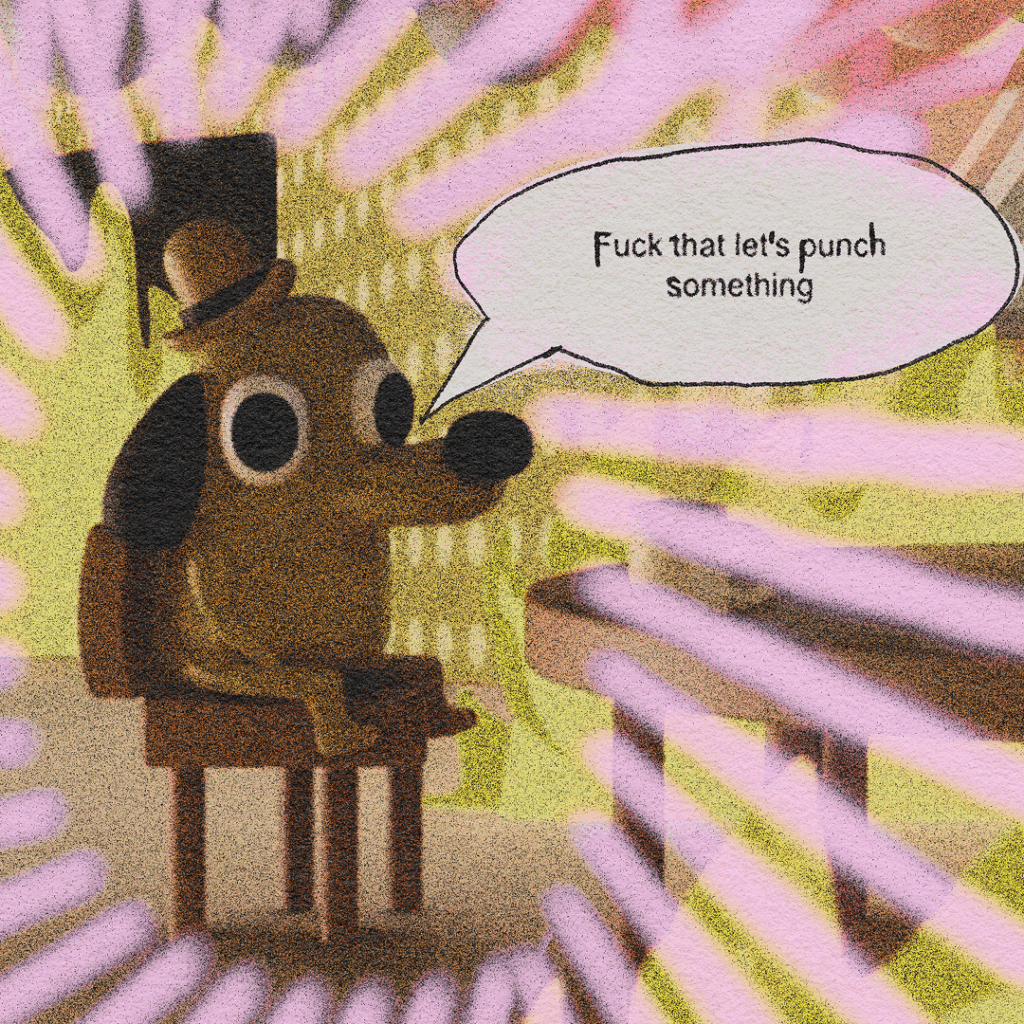
The Meme Dog Walks Out of the Fire
Why, if it isn’t the final Good Tape newsletter of 2025. Yeah, it snuck up on us too.
It’s been a weird year all around. We have secret police now, measles is back, and a creature called “Nigel Thistledown” was willed into being against the laws of God and nature. Two major podcast studios have shuttered or restructured, while media giants continue competing to see who can make the fattest corporate Turducken.
But bright spots have continued to emerge in our industry and beyond. The narrative format is having a resurgence. The walk-and-talk political ad is at its absolute creative zenith (thanks, Zohran!). Pushkin revived “Heavyweight.” Silver linings everywhere.
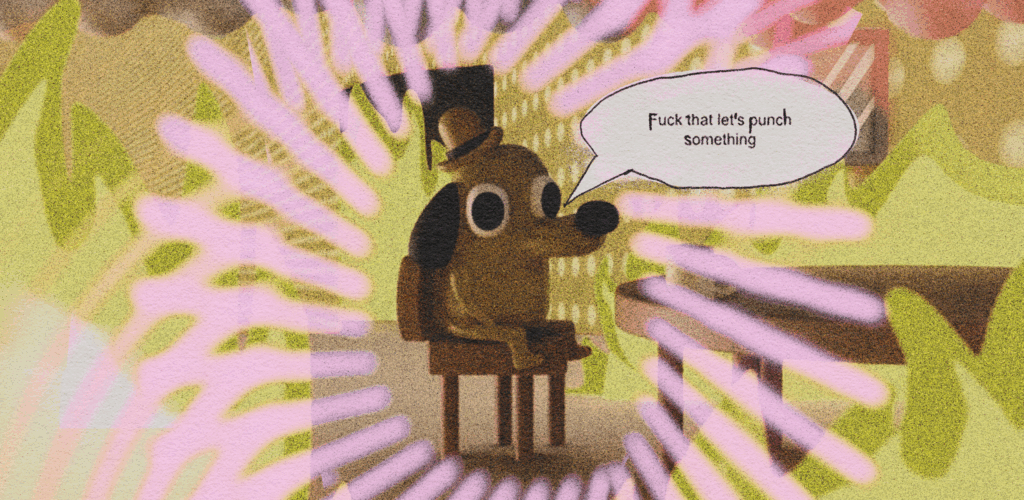
So in an attempt to encapsulate the year, we turned to a few friends to define it in pod form. Read on for “The Most ‘2025’ Episodes of 2025,” courtesy of our unbelievable community. Select quote: “2025 made me feel like I was that meme dog in the fire saying ‘this is fine.’ This episode walked in and yelled FUCK THAT LET’S PUNCH SOMETHING.” Hell yeah.
We’ve also just released two more digital pieces from The Threat Issue reflecting one of the year’s most urgent stories: the fight for Palestinian lives and liberation amid genocide. The first, from Roqayah Chamseddine, captures how the rise of podcasting in Gaza has transformed how Gazans counteract propaganda by chronicling the intimate moments of their lives. The second, from Kayla Kumari Upadhyaya, reviews The Heart’s “Great Love,” a 2024 series which hands the mic to Palestinians to create a layered narrative of pain, beauty, and truth. Both articles contain some of the best writing we’ve published all year. Read them! Read them twice!
Finally, we would be remiss not to reminisce on a few 2025 milestones of our own. This year:
• Good Tape welcomed our new managing editor, Becca James.
• We held our first Off The Record “Fast Follow Summit,” hosted by Sam Sanders.
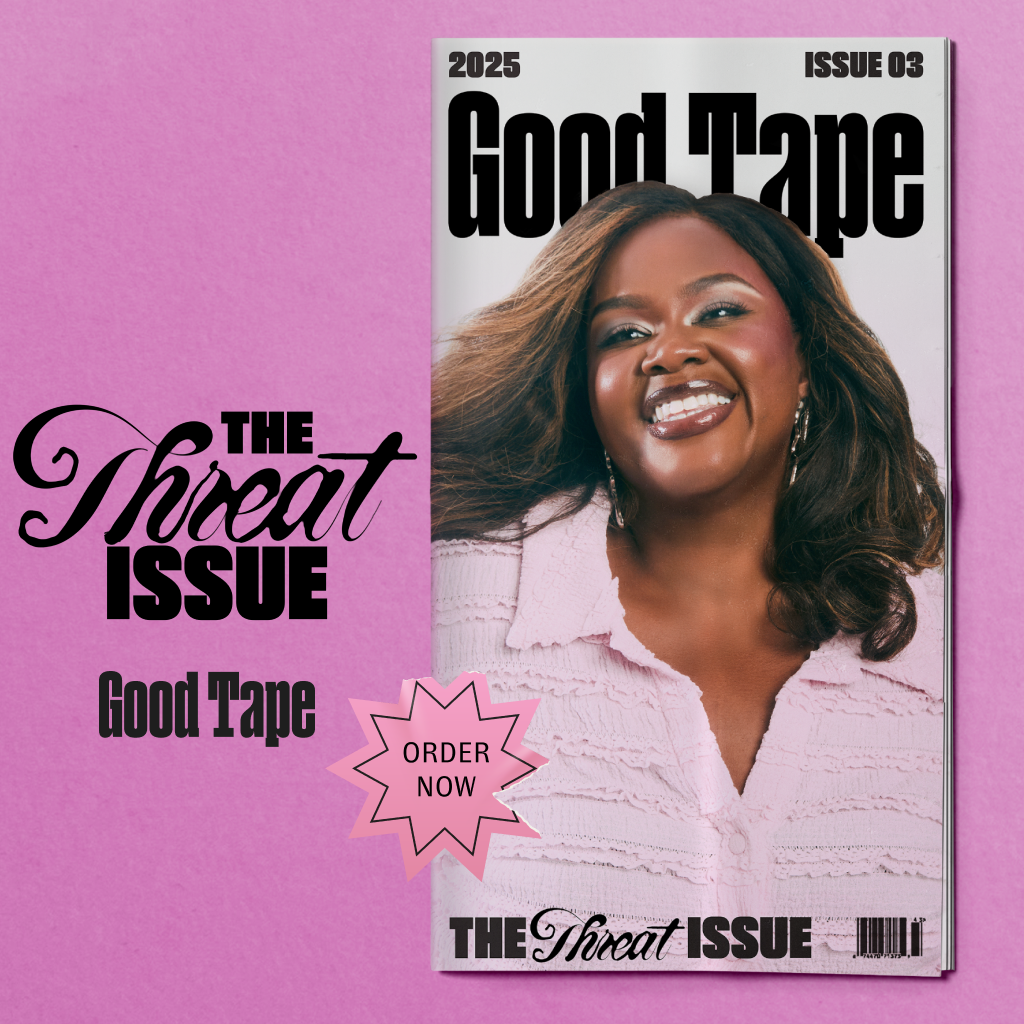
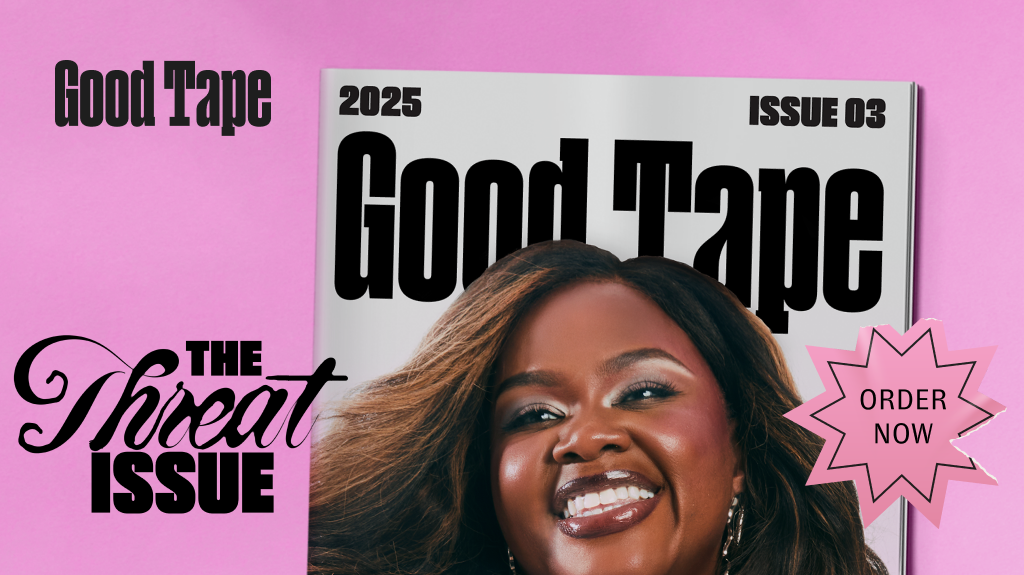
• We published our third annual print issue, featuring a high-glam photo shoot for our cover story with the incomparable Nicole Byer.
• Good Tape Studio designed original artwork for 40 podcasts, designed and fabricated a video pod set, and rebranded a beloved podcast network.
• We launched our first-ever subscription program. It makes a good stocking stuffer, just saying…
There’s a lot we have planned for 2026, but we’re heading into eggnog season feeling pretty accomplished.
And if you’ll indulge a brief shift from the royal “we” to the personal “I,” it’s been five months since I came aboard as Good Tape’s newsletter editor. In July, our publisher, Dane Cardiel, gave me a blank check to draw up this biweekly note more or less however I wanted. That’s a humbling amount of trust to receive, and a rare thing when so many newsletters exist as grim, joyless engines driving commerce and SEO. Good Tape has let me keep it weird, and I am profoundly grateful to them and to you for reading.
– Katie Clark Gray for Good Tape
How do we tell the story of 2025? What would we put in its time capsule? We asked a few friends and creators to share the podcast episodes that best summed up the year, for better or for worse. Please enjoy. (Entries have been lightly edited for length and clarity.)
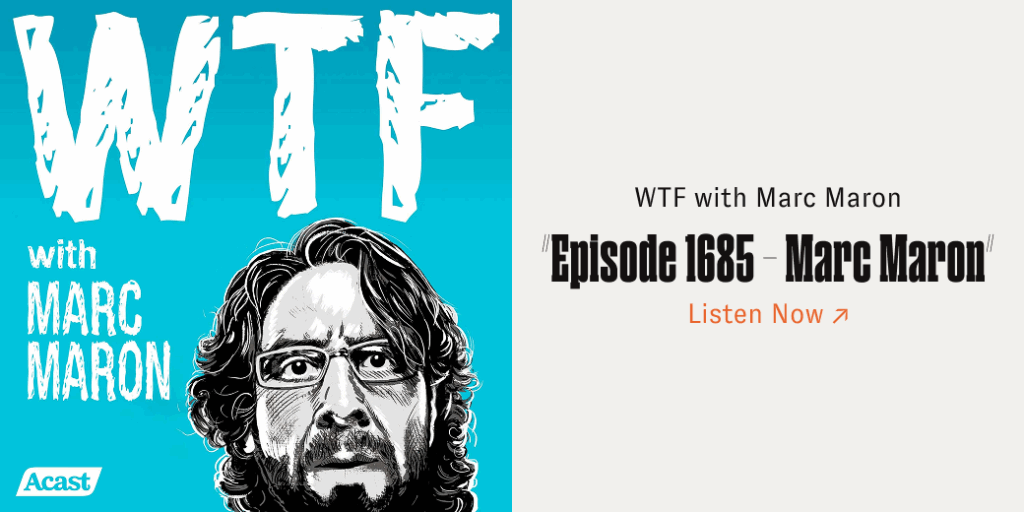
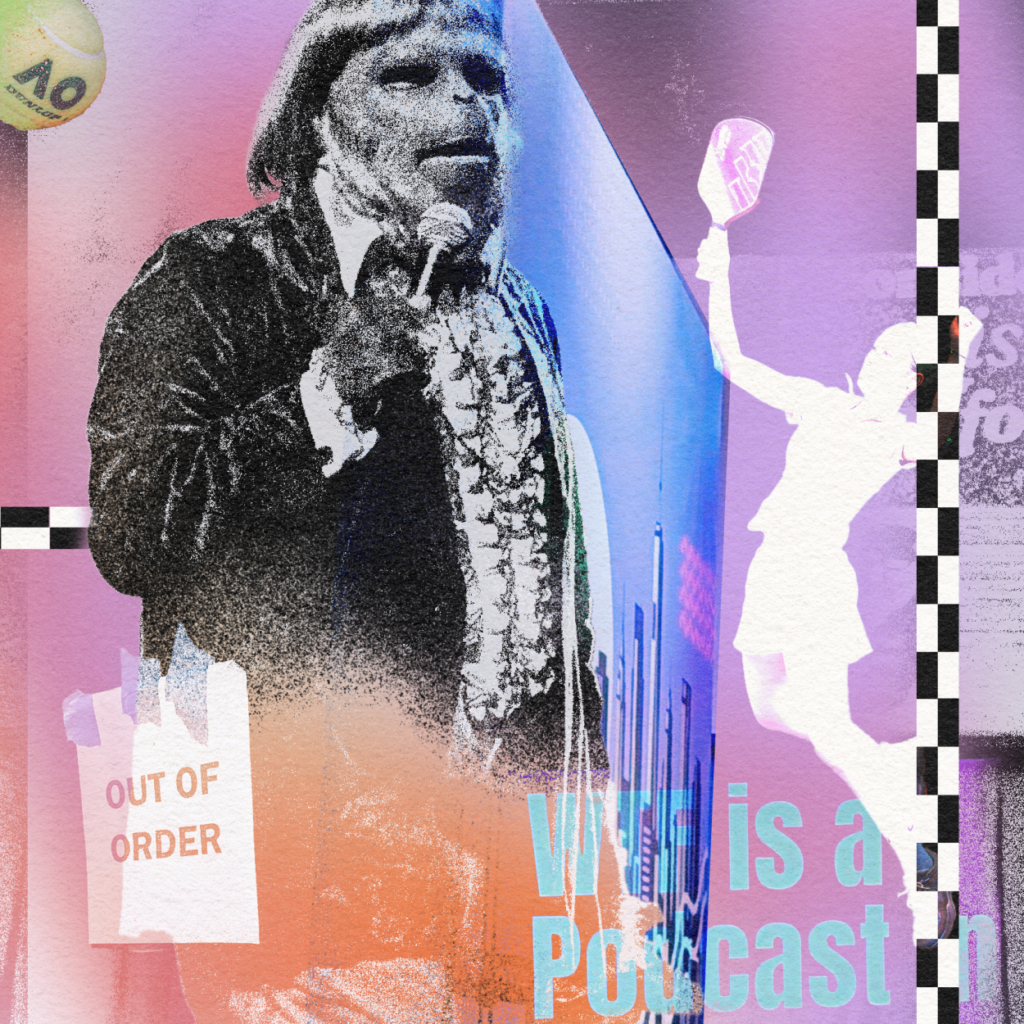
“Finding out that Marc was ending his podcast was a MOMENT. Who are we as podcast listeners without seeing ‘WTF’ pop up in our feed once a week, or when one of his previous guests passes? Most of us do not know what it’s like. Where will the medium flow without his influence? It seems relevant that he said he’d never PIVOT TO VIDEO, just as people are continuously caving to the pressure to do so. I was so excited to know who his LAST guest would be, and I know some people said it was epic. Honestly, I was not excited to hear from Obama again. I think his second-to-last episode, the episode that is just him, should have been his last. It was a big goodbye, and we said goodbye to a LOT this year. It was a year of sad, terrain-shifting goodbyes.”
– Lauren Passell, founder, Tink Media
“Critics from The New Yorker unboxing a Labubu and then interrogating the cultural resonance of fads from 16th-century tulips to Beanie Babies? Say less!”
– Ben Richardson, director of off-platform audience strategy, Condé Nast
“What does it take to make a new season of an award-winning, popular, and wildly acclaimed podcast in 2025? Ronald Young Jr. tells us in less than 10 minutes in this candid update on podcast funding, sponsorship, membership, and video in 2025.”
– Amanda McLoughlin, founder and CEO, Multitude

“2025 made me feel like I was that meme dog in the fire saying ‘this is fine.’ This episode walked in and yelled FUCK THAT LET’S PUNCH SOMETHING. Lauren Shippen’s new fiction show is like ‘Fleabag’ meets ‘Venom.’ It does not shy away from the cathartic urge to create some havoc. And while I regularly have days where I feel like an angry loser, it is so rare to have stories where women get to be that! So if you like chaotic women as much as I do, this is for you. I love this episode, and it made me feel less crazy in 2025.”
– Eleanor Hyde, CEO and producer, Audacious Machine Creative
“The world tuned in to the 2025 NYC mayoral race, and Zohran fever took over. Mamdani’s impact is here to stay, marking the beginning of a new movement in political campaigning.”
– Miah Hardy, associate manager of audio audience strategy, Condé Nast
“It’s the story of a group of African women slowly finding their voice and rising up to confront corruption using means and methods that are within their grasp. With so many traditional avenues of protest feeling unsafe right now, I think many of us are dreaming of a moment of heroism and unity like the one described in this episode. I think it’s important to have stories like this to remind us that it is possible!”
– Nichole Hill, audio showrunner and host, “Our Ancestors Were Messy”
“I almost went with the ‘Red Scare’ Nick Fuentes episodes, but I realized that I think that is a story ending in 2025 (fingers crossed) — and I hope for my grandkids that Zohran Mamdani represents a story that begins in 2025. This interview is particularly iconic to me coming off the heels of Zohran’s Trump meeting — the most 2025 story I can think of. It’s postmodern, confusing, maybe good? Maybe terrible? It’s so damn funny but also truly disturbing and stupid and depressing all at once… Like Trump’s reaction to the fascist thing, being okay with it, liking Zohran anyway, sums up quite a bit of ‘what his whole deal is.’ And also, unlike the ‘Red Scare’ Nick Fuentes episode… this is actually fun to listen to!!!”
– Andrew Callaway, producer, PRX
“Nothing is more 2025 than hiring an Etsy witch. It embodies the year’s last resort, desperation sorta vibe quite well.”
– Caila Litman, GTM strategist, iHeart
“This episode felt like a distillation of this year’s politics: the amplification of radical right-wing voices in the wake of Charlie Kirk, an attempted olive branch offering by Noel King, and 25 minutes of ideological bulldozing that left me feeling hollowed out, bereft of hope, and as if the different realities we live in will never be reconciled. The interview ends with Rufo saying he doesn’t understand why he’s treated like a radical: ‘l actually think all of my positions are moderate, well reasoned, in accordance with basic decency and almost unremarkable’ – and King leaves the listener to come to their own conclusions about ‘reason’ in this hellscape of a reality.”
– H Conley, freelance journalist and producer
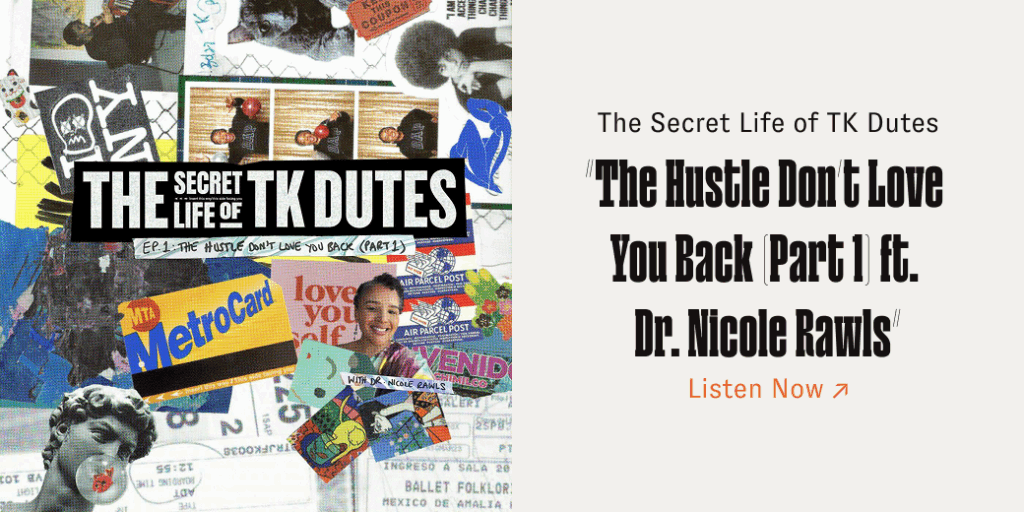
“We’ve seen so much money come into podcasting in a real way this year (hello Golden Globes, hello Netflix, hello YouTube), and yet we’ve had mass layoffs of the talented people who made this industry what it is. There’s tons of notoriety and wealth, and yet it seems to be held by the most white and boring people in this space.
TK’s new series explores extractive labor practices, white supremacy, capitalism, and all of that inside the podcast industry, but through storytelling and humanity. One quote has stuck with me from this episode from Dr. Nicole Rawls, as she talks about coping with the heartbreak that comes from having to work in this system. ‘You’re going into a dirty house. How are you cleansing and protecting yourself? Don’t go in naive, and don’t go in thinking you’re going to be the savior.’
How are we protecting ourselves and each other in this industry in 2026?”
– Steph Colbourn, CEO, editaudio
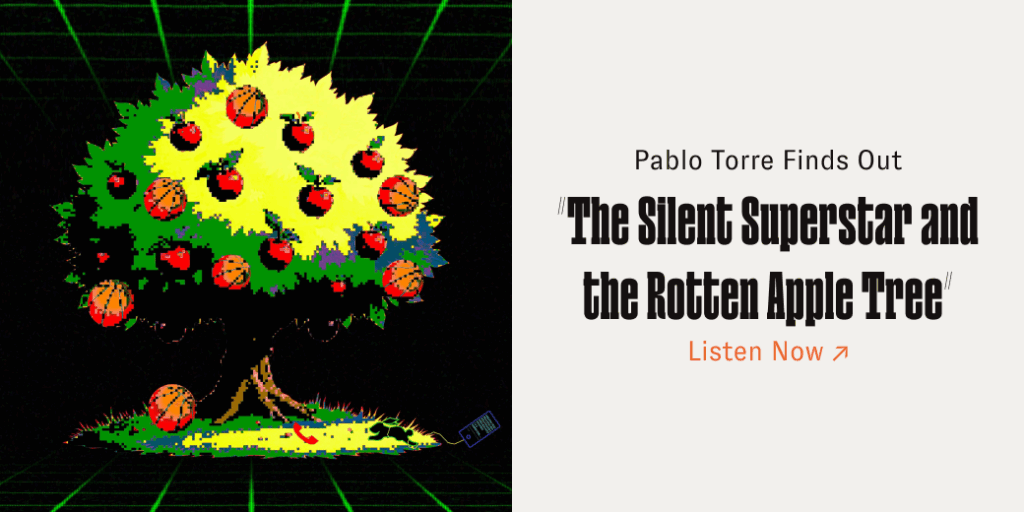
“I think this is the episode that kicks off Torre’s investigative reporting into Steve Ballmer and Clippers star Kawhi Leonard’s team. It felt 2025 because it embodied billionaires behaving badly, destroying things meant to protect players or the spirit of competition, and the slide into further desensitization of breaking norms. At the end of the day, the country is not destroyed by this sporting scandal, but it feels thematic to the mess of 2025, where billionaires break the rules, and the rest of us gotta deal with the mess.
I suppose Pablo also represents how podcast creators are evolving their own brand or business. Not sure if we consider this completely an indie-to-small podcast, but it represents why indie or small podcast networks are a great platform for investigative reporting. There’s more freedom and room to develop, edit, and introduce storylines that breathe when they’re not tied to broadcast clocks or word counts.”
– Meggan Ellingboe, public relations and marketing consultant
Speaking For Ourselves
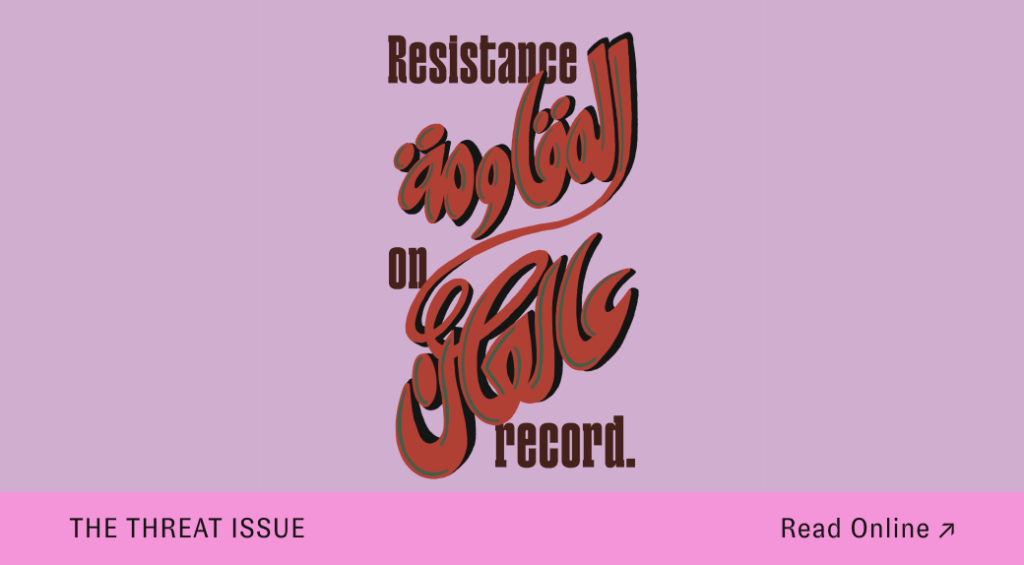
Podcasting becomes a vehicle for resistance, countering well-funded propaganda.
Words by: Roqayah Chamseddine
Art by: Madiha Malik
In Gaza, the immediacy of threats is visceral. Confined to a besieged strip of land, the indigenous population has faced more than two years of genocide. During this time, the disruption has been made strikingly visible to the larger world thanks to the power of online exposure, which has led not only to citizens of the imperial core being exposed to the lived realities of Palestinian life under occupation but to the undermining of decades of Israeli propaganda.
Those courageous enough to use this connectivity have compelled the international community to confront the reality on the ground, and are employing whatever means at their disposal to preserve — and sometimes defend to the death — an archive of unfolding catastrophe conveyed through fearless storytelling. The rise in popularity of podcasting, in particular, over the past decade has transformed how these intimate stories are shared, allowing voices regularly misrepresented in mainstream media to forge their own autonomous spaces and challenge dominant narratives without interference from corporate or political forces. As a result, podcasting has become a powerful form of resistance, chipping away at Israel’s propaganda efforts, exposing the human costs of occupation and siege, and amplifying voices deliberately silenced in mainstream coverage to a global audience that would have otherwise been out of reach.
Ahmed Salah, a former software engineer from northern Gaza, displaced dozens of times by Israeli airstrikes, communicates this travesty clearly. “We’re always excluded from the international conversation on what’s happening on the ground and what we want for our people,” he said. Yet for the first time in his life, Salah is seeing videos and podcasts from Gaza getting global dissemination. “I feel like we are getting a chance to speak for ourselves.”
The Beating Heart of Gaza

In “Great Love: Gaza Monologues Revisited,” the fight for liberation is a story told over and over.
Words by: Kayla Kumari Upadhyaya
Art by: Sami Wittwer
“Everything you are about to hear is 100% real, 100% true.” These words are heard frequently in “Great Love.” One of the many apt uses of recapitulation throughout the series, it reflects genocide as a series of repetitions, not a flat timeline but a cyclical one.
Unfortunately, Zionists have their own refrains. A common one is that the history is “too complicated.” Meant as a barrier to entry for folks newly awoken to the fight for Palestinian liberation, it implies one must have a history degree and understanding of various 20th-century treaties to be able to speak about Palestine. It is, of course, a bullshit conceit, easily debunked in the first few minutes of the first full episode of “Great Love,” in which Ali Dajani gives the most straightforward, comprehensible — and, yes, 100% real, 100% true — breakdown of the 1948 Nakba in just a few sentences.
So often, the onus of establishing truth is placed on the resistance, rather than on the oppressor, who has the media, institutions, political leaders, and even, in some cases, the public record backing them up. “Great Love” serves as a poignant reminder that, although the responsibility may be misplaced, transforming truth into art by challenging false narratives and untrue refrains is worthwhile.
Katie Clark Gray is a Webby award-winning podcast producer, Pew Fellow, and partner at Uncompromised Creative. Currently she writes for Audible Originals’ “Scamfluencers” and “Business Wars.” Past credits include: “The Best Idea Yet,” “Masters of Scale,” “Spark & Fire,” “Meditative Story,” and feature film “The Paper Store.”