The Artist vs. The Creator
Hello, Good Tape readers! The 25th Tribeca Festival just wrapped up on Sunday. We’ve included some highlights later in this newsletter (so read to the end😊). But one of the fest’s most sobering takeaways about creativity came from the film side, via the new comedy travelogue “Bob and Dave Climb Machu Picchu.”
The slight but charming 80-minute documentary follows famous besties Bob Odenkirk and David Cross as they huff and puff their way to the ancient Incan fortress. Shots of impossibly gorgeous mountain vistas are intercut with shaky GoPro footage of two self-described “very old men” ascending a trail with a team of agile Peruvians carrying their gear.
Apologies — this description absolutely doesn’t do the film justice. Amid some very silly ongoing bits (complimentary), it was surprisingly moving to watch an iconic friendship take on a new shape in a new era. But much of the film’s poignancy comes from the time warp created by mixing present-day footage with archival material from the duo’s seminal HBO sketch series, “Mr. Show.”
The secret to “Mr. Show,” Odenkirk says in voiceover, was that “we were entertaining ourselves.” Its famously influential comedic style developed because Cross and Odenkirk were given room to follow their own idiosyncratic instincts. The two most important audience members of “Mr. Show,” Odenkirk declares, were Bob and Dave.
Once upon a time, this observation might have been considered standard auteur fare. But in 2026, the concept is so revolutionary as to be absurd. What creator in the world has the luxury of creating something just for themselves?
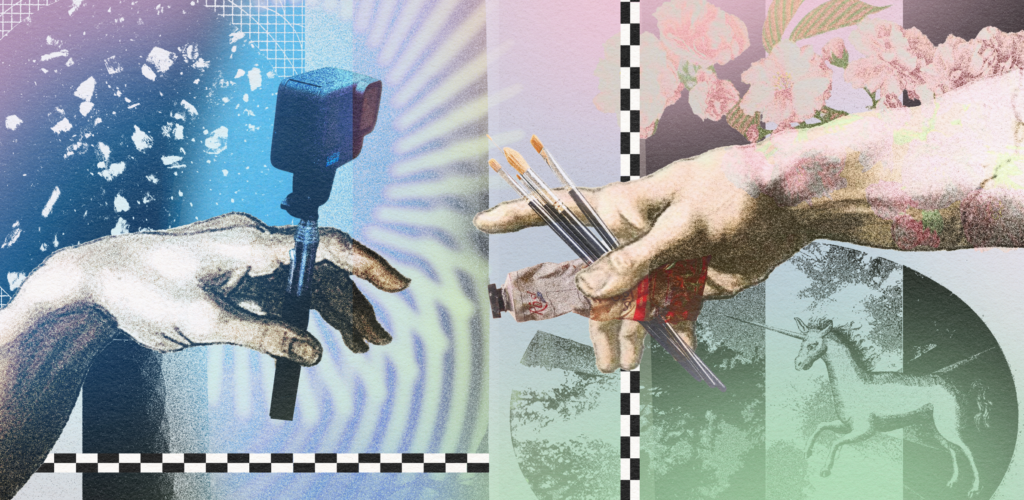
Compare Odenkirk’s quote to one from Patreon founder and CEO Jack Conte made on “Colin and Samir” in 2021. The pair asked him to define the difference between an artist and a professional creator:
Conte’s answer centers on a creator’s desire to serve and grow an audience, which is achieved through experimentation with SEO and algorithms, as well as with the content itself. Creators, Conte said, are always watching the analytics and adjusting their content based on fan response, turning the creative process into a two-way conversation. He described this, broadly, as “impact.” The more people you reach, the more impact you have.
By contrast, he said, “when I think of traditional artists, I think of these high-conviction, ‘I’m going to say the thing I have to say, I make for myself, I don’t make for my audience, I make for me.’” To illustrate the point, Conte asked us to imagine Jimi Hendrix getting in front of a webcam: “Hey guys, don’t forget to like and subscribe!” The thought is too nonsensical to picture.
Ostensibly, Conte was neither condemning the Hendrix-style purist nor belittling YouTubers; he was just saying that a Hendrix is built differently than someone who thrives on Patreon. These are two different kinds of people, Conte alleged. One creates for self-expression; one creates to serve their fans.
But is this true? Or is it just that we are living in a world in which every artist is constantly confronted with metrics, and a decision to pursue an unpopular idea means banishment to an algorithmic black hole?
This equation has, of course, complicating factors. Hendrix didn’t have to worry about his popularity because an entire music label did that for him. (Ensuing fights over royalties have been playing out ever since.) Odenkirk and Cross may have been able to create comedy to entertain themselves, but they also fought bitterly with HBO execs who didn’t fully get the show, and who canceled it unceremoniously after just 30 episodes.
Even Conte has been sounding off in 2026 about how social media is no longer working for creators, which may explain why today’s buzziest auteurs have been reviving the idea of making art that satisfies the artist rather than the algorithm.
No art-maker has ever been truly free from public opinion. Before monthly downloads or channel views, movies were judged by box office receipts and TV shows by Nielsen ratings. Before that, plays and operas and paintings were commissioned and judged by various royals and Medicis. Musicians are still pressured into playing only their hits. For that matter, in the purest sense, live comedy has always been a two-way transaction with the audience. You tell a joke, and people either laugh or they don’t.
Still, it feels like artists and creators — if you even consider these different groups — have been struggling lately to rediscover the purpose behind their art. If we’re not making work that entertains and fulfills us, why are we doing it?
Bree Webber Is Convinced It Has To Get Better
And other musings from the “Unbelievable” and “That’s Her” actor.
Words by Dane Cardiel
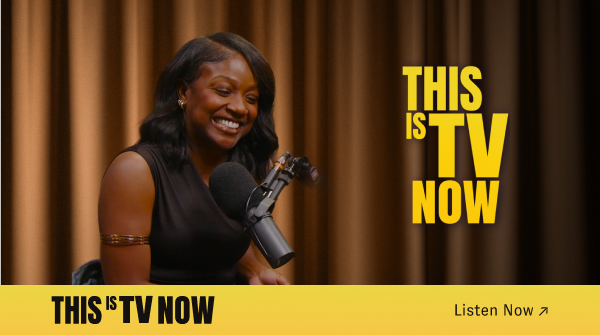
Bree Webber is a multi-faceted actor, filmmaker, and creative producer. Her experience includes producing for the NAACP Hollywood Bureau, developing content with JuVee Productions, and supporting cultural programming with The Diva Foundation.
This week on “This Is TV Now,” we talk to Webber about podcasting and the difficult terrain of navigating transitions as a solo creator, leveraging piecemeal collaborations to larger productions that require intentionality and honest creative partnership. Afterward, we extended the conversation a bit before discussing her hope for and belief in the future.
Who is the most underrated person in your industry right now?
Oh my gosh. There are so many ways to go. Which industry?
Good Tape: The one you define yourself in.
Bree Webber: Me! You see, I like to make it dramatic. “Bree Webber. Kid from Detroit. Moved to California when she was 16. She’s really got it going on. Check her out.”

Some other stories that have our attention, brought to you by Good Tape’s “Off The Record” — an event series creating real-time dialogues between podcast executives, creatives, and brands on hyper-relevant topics to evolve the medium.
- Congratulations to “Roommates” podcast hosts Jalen Brunson and Josh Hart for recent achievements in their side hustle as professional basketball players.
-
We have long been fans of Rephonic’s 3D audio graphing tool, which maps the interconnectedness of different podcast audiences. So, naturally, we’ve been exploring Podroll Atlas, which graphs how often others recommend a show and color-codes results by podcast company. Fair warning: It’s addictive.
-
After consuming as much of Tribeca’s 2026 podcasting lineup as humanly possible, here are our standout live moments:
-
Marc Maron having no idea who Jay Shetty is (“On with Kara Swisher”)
-
Anna Sale gently redirecting her questions to writer/director Erica Schmidt every time Schmidt’s husband, Peter Dinklage, chimed in (“Death, Sex, and Money”)
-
Bella Freud and Laurie Anderson having a chat so intimate it felt like slipping into an ASMR video (“Fashion Neurosis”)
-
Hrishikesh Hirway and Adam Scott revealing how miserable they often find the creative process (at La Poisson Rouge)
-
Alex Sujong Laughlin confessing that she bought her dress that same morning (“Audio Flux Circuit 07: Trash or Treasure”)
-
A terrific crop of limited series, including these award-winners. Find them in your podcast player and subscribe!
-

Good Tape is proudly independent yet deeply rooted in community. If you value our work exploring the ideas, people, and forces influencing podcasting, share this newsletter with a friend. Or, better yet, become a subscriber. Your support helps sustain our commitment to elevating cultural and critical coverage of the podcast industry.
Katie Clark Gray is a Webby award-winning podcast producer, Pew Fellow, and partner at Uncompromised Creative. Currently she writes for Audible Originals’ “Scamfluencers” and “Business Wars.” Past credits include: “The Best Idea Yet,” “Masters of Scale,” “Spark & Fire,” “Meditative Story,” and feature film “The Paper Store.”