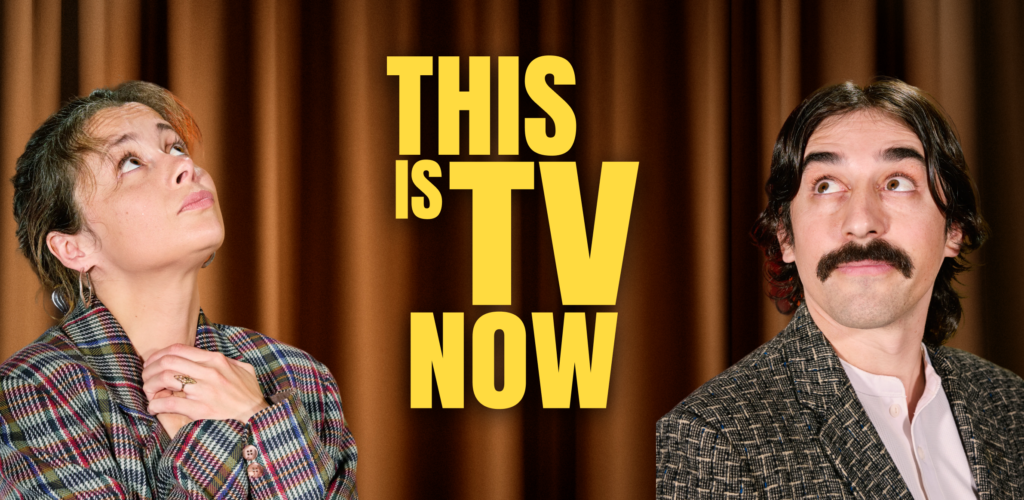
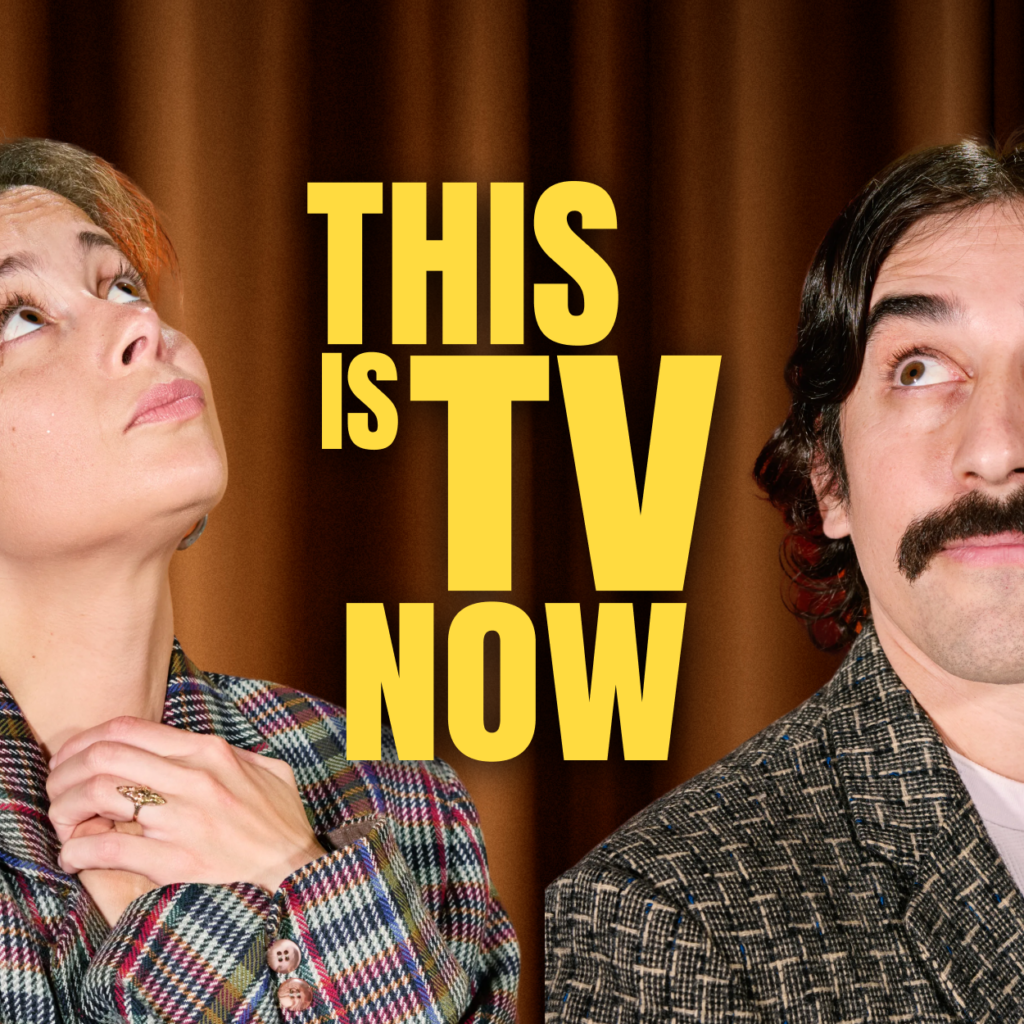
This Is TV Now
Did you hear the news? Good Tape has a podcast! You can listen to it here: “This Is TV Now.”
This weekly video show will explore the ideas, people, and forces influencing podcasting, for better or for worse. It’s hosted and co-produced by Good Tape’s founder and publisher, Dane Cardiel, and Stella Young of Tiny Legends Productions.
The series launched yesterday with James Kim (Overtones Media), who shares his perspective on The Industry™ and why he’s motivated to create work that forces audiences to question the prevailing definition of a podcast. Upcoming guests will include Laura Ramadei (“Girls On Porn”), Bree Webber (Actor, “That’s Her”), Keida Mascaro (The Cave), and Hannah Doyle (The Publish Press).
Read the press release here: Welcome to ‘This Is TV Now.’
In honor of the premiere episodes dropping, we asked Dane and Stella five questions about themselves, the show, and the most shocking conclusions they’ve reached so far.
- Let’s start with the show’s title. How did that come about?
Stella: First of all, kudos to Dane for the title because it’s genius. People argue about what podcasting is, whether it’s media, entertainment, journalism, television, radio, or something entirely new. But underneath all of those debates is one reality: This is TV now.
Dane: The title is intentionally a bit cheeky. To say “This Is TV Now” is to continue the long tradition of podcast prognosticators making big statements every six months about what era podcasting is in. What we ultimately mean by this will be constantly challenged on the show by people with actual work experience and knowledge of podcasting’s impact on culture.
- To your point, “This Is TV Now” is a video podcast that publishes on YouTube as well as RSS feeds. Do you hope more people will be listening or watching?
Stella: A year ago, I would have told you that all I cared about was video — that’s where the growth is, that’s where the audience is — but I’ve changed my tune. There’s something kind of great about having a strong audio audience. That’s where podcasting started; there’s a purity as well as an intimacy you don’t get with video.
Dane: Most of my friends still prefer to listen to podcasts, even if they have the option to watch on YouTube. But I can’t say I have a preference. This will be a big learning experience for me as I put 10 years of theory into practice.
- Speaking of experience, you describe yourselves as, respectively, an “industry insider” (Dane) and an “industry outsider” (Stella). Say more.
Stella: I’ve been around the industry enough to understand it, but I’m currently not really in it like I was, and I think there’s value in that. I’ve seen how it operates, but I don’t have to worry about navigating industry politics. I can just look at it from the outside and say what I see
Dane: My “insider” perspective is mostly just a stubbornness for this medium despite all of its inherent limitations and flaws. My posture toward our industry has always been to challenge it, and to push it toward a future that doesn’t capitulate to the handful of white men who assume they have the blueprint for what comes next for podcasting. Insiders should always look outward for inspiration rather than try to protect the thing we presume to know so much about from outside influence.
- What is the most shocking conclusion either you or a guest has come to so far?
Stella: Honestly, how narrow-minded and stubborn I’ve been. I came from a video-first perspective, so it was easy for me to look at the audio side and think, “You need to accept that video is the future.” What a silly way to look at something that is so multifaceted and complex. It’s a thousand different things to a thousand different people. It’s not just yours and yours alone.
- Given that no one actually knows what they’re doing, what is giving you hope these days?
Stella: That’s a great question. Podcasting and digital media are increasingly becoming artist-first businesses. The creator owns the IP. They own the audience. They own the creative. They get to make decisions for themselves rather than having those decisions filtered through layers of executives, gatekeepers, and corporate interests. I think that’s a huge step in the right direction.
Dane: Billionaire dorks and the bootlicking managerial class are losing ground on the supposed inevitability of AI’s place in our lives. The proverbial tomatoes are being thrown at people who lack taste, talent, and creative ingenuity. And anyone who attempts to consider themselves part of the beautiful history of art by generating AI slop will be rightfully shamed. This gives me immense hope.
Check out “This Is TV Now” wherever you get your podcasts (including on YouTube). New episodes every Tuesday.
James Kim Is Dying to Teleport
And more musings from the creator of “Moonface” and “You Feeling This.”
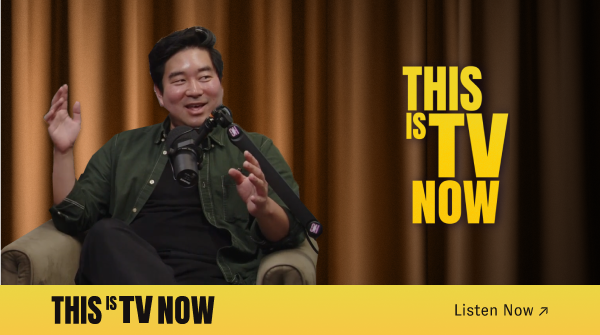
James Kim is a Los Angeles-based creator who makes documentary, interview, and fiction podcasts. He got his start making radio stories for KPCC’s “Off-Ramp” in 2011. Eventually, Kim started his own podcast company, Overtones Media, where he and his team make original and client-based podcasts. Some of Kim’s original podcasts include “Are You Feeling This?” and “Moonface,” which was recently recognized by Apple Podcasts as one of 20 podcasts to celebrate for the platform’s 20th anniversary.
This week on “This Is TV Now,” we talk to James Kim about his decades-plus career in podcasting, his reasons for optimism, and his insistence on working with collaborators who don’t fuck around and want to push the boundaries. Afterward, we extended the conversation a bit before decompressing with ghost theory.
What makes you optimistic about the future?
James Kim: I get excited about people who have a lot to say and use audio as the means to say it. I still see people trying to push the boundaries of audio to do really heartfelt stuff, [who are] passionate about the craft, and use it as a form of expression. That gets me excited because all of this noise — all the headlines about video podcasts, Netflix getting in the game, all sorts of things — having all of that news dictate the entire state of the industry is insane. It’s like looking at the Billboard Top 20 charts and saying that’s what music is now. And you’re like, “Really?” That’s insane. Are you not going to pay attention to any other genre, any other sort of outlet, any other sort of artist that doesn’t fit the top 20? No. So, I’m just really optimistic because I see those creators. I see those people. I hear that kind of work, and it gets me excited.
The Biggest Little Festival
As Tribeca celebrates 25 years, the festival’s podcast slate marries indie sensibilities and industry cred.
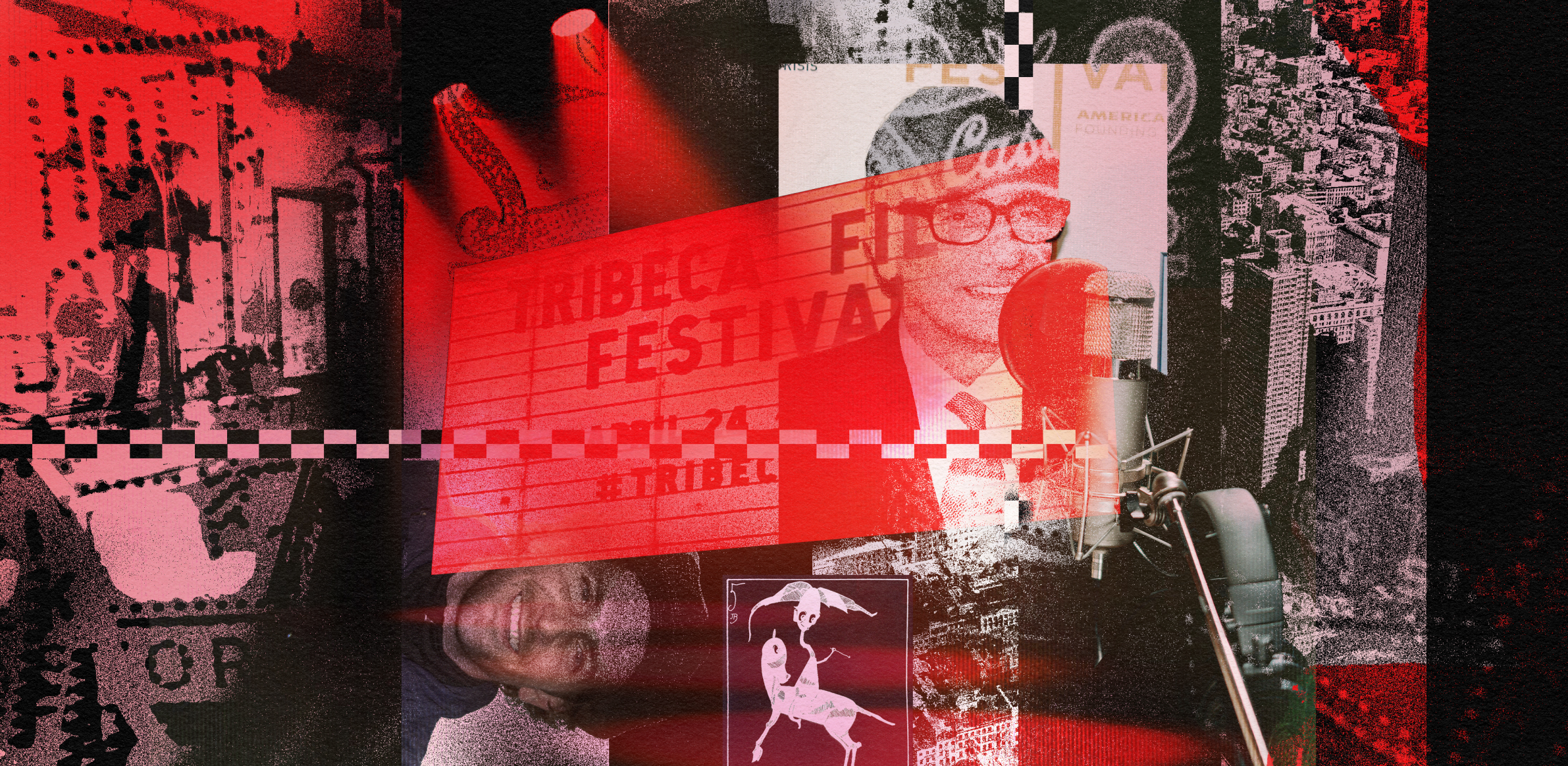
Words by Katie Clark Gray
Art by Sami Wittwer
The Tribeca Festival was born out of crisis and devastation, not once but twice.
The first time was in 2002. Less than eight months after the September 11 attacks, the smell of ozone and powdered concrete still permeated lower Manhattan. Grieving for their neighborhood and worried for its economic and spiritual fate, co-founders Robert De Niro, Jane Rosenthal, and Craig Hatkoff launched the inaugural Tribeca Film Festival. Though the festival was geared toward celebrating independent film, Hollywood turned out in support. Movies starring A-listers like Al Pacino and Sandra Bullock premiered there. Martin Scorsese curated a classic film series. Gwyneth Paltrow popped up in the ad campaigns. In a blink, Tribeca became one of cinema’s most prestigious events, bypassing the typical growing pains one might expect from a young festival on the rise.
Tribeca’s rebirth came in 2021, well into the COVID-19 pandemic. The previous year’s physical festival was canceled along with most theatrical film releases and projects in production across the film industry. Filmmakers everywhere were out of work, and alternate forms of media — like podcasting — were ascendant. Upon its return, the Tribeca Festival dropped the word “film” from its title and announced a new, expanded slate of content categories, including web series, video games, and podcasts.

Some other stories that have our attention, brought to you by Good Tape’s “Off The Record” — an event series creating real-time dialogues between podcast executives, creatives, and brands on hyper-relevant topics to evolve the medium.
- People are pretty excited about the new Owl & Co. report, which states that the podcast industry generated around $9.2 billion in sales in 2025, a 23% increase over the year prior. The report partially attributed the gains to podcasting’s adoption of video. Cool — now let’s see if the revenue bump starts leading to more jobs…
- Spotify, perhaps not wanting to get left behind in the creator economy’s next phase, has launched its own Patreon clone, “Memberships.” This might feel more creator-friendly if they weren’t also talking about launching an AI-generated “Personal Podcasts” feature that would cut the creators out entirely.
- Tribeca kicks off tonight, with podcast programming starting on June 8. If you’re going to be at the festival, come find us!
- Some things we’re listening to lately: ProPublica’s new podcast “Paper Trail,” highlighting some of the best reporting in the country; the music history podcast “Decomposed,” which gives us vintage public radio vibes; and the Josh Johnson episode of “Talk Easy with Sam Fragoso.” (You should also see Johnson’s latest HBO special, “Symphony,” it’s very good!)

Good Tape is proudly independent yet deeply rooted in community. If you value our work exploring the ideas, people, and forces shaping podcasting, share this newsletter with a friend. Or, better yet, become a subscriber. Your support helps sustain our commitment to elevating cultural and critical coverage of the podcast industry.
Katie Clark Gray is a Webby award-winning podcast producer, Pew Fellow, and partner at Uncompromised Creative. Currently she writes for Audible Originals’ “Scamfluencers” and “Business Wars.” Past credits include: “The Best Idea Yet,” “Masters of Scale,” “Spark & Fire,” “Meditative Story,” and feature film “The Paper Store.”