Katie Clark Gray is a Webby award-winning podcast producer, Pew Fellow, and partner at Uncompromised Creative. Currently she writes for Audible Originals’ “Scamfluencers” and “Business Wars.” Past credits include: “The Best Idea Yet,” “Masters of Scale,” “Spark & Fire,” “Meditative Story,” and feature film “The Paper Store.”
The Biggest Little Festival
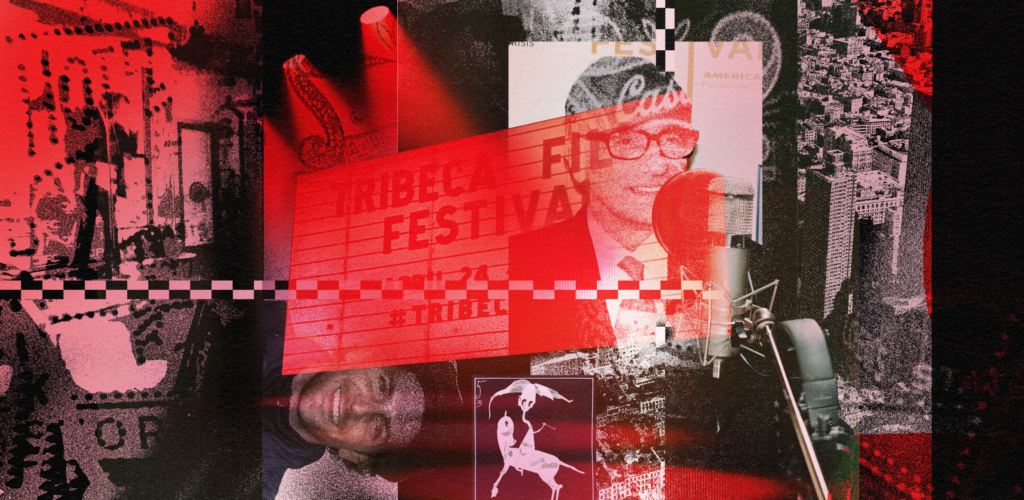
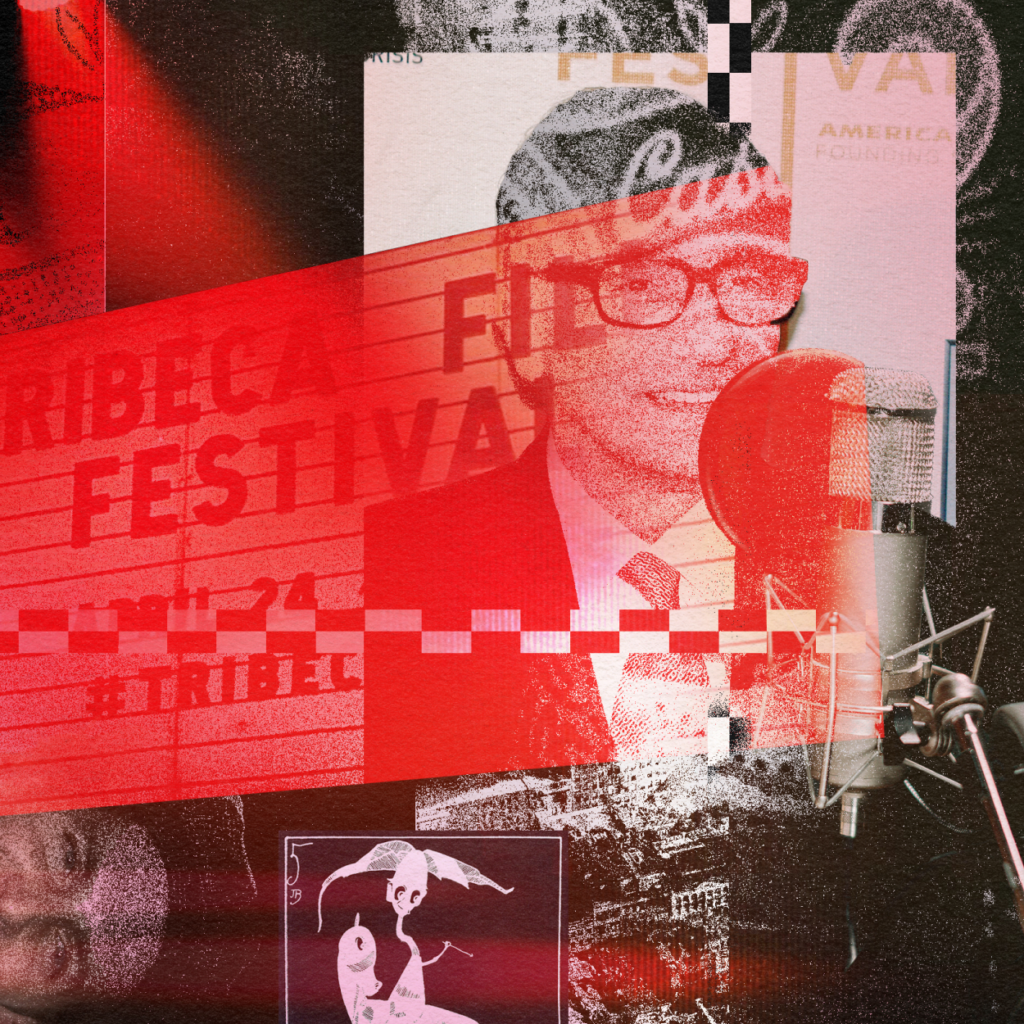
The Tribeca Festival was born out of crisis and devastation, not once but twice.
The first time was in 2002. Less than eight months after the September 11 attacks, the smell of ozone and powdered concrete still permeated lower Manhattan. Grieving for their neighborhood and worried for its economic and spiritual fate, co-founders Robert De Niro, Jane Rosenthal, and Craig Hatkoff launched the inaugural Tribeca Film Festival. Though the festival was geared toward celebrating independent film, Hollywood turned out in support. Movies starring A-listers like Al Pacino and Sandra Bullock premiered there. Martin Scorsese curated a classic film series. Gwyneth Paltrow popped up in the ad campaigns. In a blink, Tribeca became one of cinema’s most prestigious events, bypassing the typical growing pains one might expect from a young festival on the rise.
Tribeca’s rebirth came in 2021, well into the COVID-19 pandemic The previous year’s physical festival was canceled along with most theatrical film releases and projects in production across the film industry. Filmmakers everywhere were out of work, and alternate forms of media — like podcasting — were ascendant. Upon its return, the Tribeca Festival dropped the word “film” from its title and announced a new, expanded slate of content categories including web series, video games, and podcasts.
Given Tribeca’s historically cozy relationship with the rich and famous, festival organizers might have been tempted to build their podcasting vertical around a culture of celebrity. It’s actually astonishing, in hindsight, that they didn’t. It would have been so simple. After all, what out-of-work A-lister didn’t have a stay-at-home pod in 2021?
Instead, Tribeca’s podcasting team forged a different, arguably more difficult but also more rewarding path: premiering thoughtfully made, fiercely independent narrative works that challenge and engage the listener. As the festival turns 25 — and the podcast category celebrates its 6th year — Tribeca’s 2026 podcasting lineup reflects a commitment to craft that feels almost defiant, existing as it does between star-studded events featuring the likes of Bruce Springsteen and Teyana Taylor.
Industry cred with an indie heart
Since 2022, the person at the center of Tribeca’s curation strategy has been Davy Gardner, head of podcasts and audio. “He’s such an evangelist for podcasts as a serious form,” said Zayd Ayers Dohrn, creator and host of “Mother Country Radicals,” which took home the Best Nonfiction Storytelling prize at Tribeca ’22. “ He’s like a publicist and an archivist and creative partner all in one.”
Dohrn’s experience at Tribeca included navigating a live premiere event featuring the subjects of his podcast: his parents, Bill Ayers and Bernardine Dohrn, formerly of the Weather Underground. While making the show, Dohrn said he hadn’t considered anything but the desire to interview his family members and make sense of his own past. “I never thought, ‘How will this go out into the world? How will it become public? How will it be received?’ until the very end,” he said. “And then I just feel like Tribeca swooped in and kind of gave us the perfect platform to launch the show.”
Gardner underscored that he was not the original architect of Tribeca’s podcast program but was hired one year into its journey. “ I applied on LinkedIn,” Gardner said with a laugh. “That’s how I got involved. Not a glamorous story.”
Before joining Tribeca, Gardner was a comedy writer, director, and performer at the Upright Citizens Brigade. He found podcasting after a producer from Radiotopia’s “The Truth” approached him to adapt one of his stage works for audio. Gardner went on to write and produce for Wondery and Audible before clicking “Apply” on that LinkedIn post. His background as both an audio creator and an improv director shapes his approach to curating and designing a week of live events that are urgent and timely.
“ In improv comedy, it only really works if something true is happening on stage,” Gardner said. “And that’s also true for live podcasting. The audience can smell bullshit.” This is why, he said, he’s never merely “programming celebrities to do interviews. I’m programming Kara Swisher, Anna Sale, Sam Fragoso, Lulu Garcia-Navarro… people that are guaranteed to have an amazing conversation with someone. And then the guest can be a wonderfully famous person. But it’s the form first.”
This year’s live talks are a splashy lot. Swisher will interview a post-“WTF” Marc Maron; Sale will speak with married collaborators Erica Schmidt and Peter Dinklage; and Adam Scott will moderate a “concert & conversation” with Hrishikesh Hirway of “Song Exploder,” among others.
The festival will also dip a toe into the video podcast waters with a live taping of Bella Freud’s “Fashion Neurosis” featuring Laurie Anderson. This choice, Gardner explained, was an intentional statement on what a thoughtful, craft-first approach to video can look like. “‘ Fashion Neurosis’ is a show about or based on a premise of psychoanalysis, and the camera is a tool used to explore that exact thesis,” Gardner said. “It’s angled down at the guest, who’s lying on a couch while they’re getting these questions from a therapist. It makes sense as a cinematographic choice. And that is definitely work that I want to showcase at a film festival. I think that’s fascinating, whether you call it a podcast or something else.”
The high-profile live talks are but one component of Tribeca’s podcasting slate. There are also the Official Selections — narrative works in juried competition that are also world premieres. The ‘world premiere’ rule is unique to Tribeca, which could stem from its origins as a film festival first, where world premiere status is often a condition of acceptance.
The Official Selections are typically grouped in themed cohorts and presented as previews to a live audience. A visual trailer plays for each show, and then each team gets a few minutes to discuss their work with a moderator. These preview events, often celebrity-free, can nevertheless be the highlight of the festival for many, especially the creators whose brief moment onstage could be their biggest break.
Katie Clark Gray is a Webby award-winning podcast producer, Pew Fellow, and partner at Uncompromised Creative. Currently she writes for Audible Originals’ “Scamfluencers” and “Business Wars.” Past credits include: “The Best Idea Yet,” “Masters of Scale,” “Spark & Fire,” “Meditative Story,” and feature film “The Paper Store.”