Wondery’s Circle of Life
On March 4, Amazon announced plans to shutter the Wondery podcast app and the Wondery+ subscription service. This decision was not unexpected, but rather the culmination of a larger corporate restructuring announced last August, which resulted in hundreds of layoffs. Over 100 full-time staffers and exponentially more contract workers were let go, and dozens of shows were canceled. (Personal disclosure: I wrote and produced one such show between 2024 and 2025, and currently write for two ex-Wondery shows, now rebranded as Audible Originals.)
Wondery+ subscribers were offered an amusingly short window — March 4-10 — to score a reduced rate on Audible’s newly announced Standard subscription. No official sunset date for the Wondery app and Wondery+ has been given yet, but suffice to say, the final wind-down will resemble more of a whimper than a bang.
It’s hard not to despair, faced with more grim evidence of the consolidation of capital and power in media, especially amid discussions of just how disastrous the fallout from Paramount-Skydance’s acquisition of Warner-Discovery will be. (Just sooo many hyphens. What are we doing here?)
But wallowing in doomerism sort of misses the point. In nature, everything is cyclical. Wildfires, even devastating ones, are essential to a biodiverse ecosystem. They clear out dead vegetation and enrich the soil, leading to new growth. The death of Wondery+ is already producing green shoots of its own.
Case in point: On Feb. 24, podcast executives and Wondery layoff survivors N’Jeri Eaton, Tonja Thigpen, and Anhelo Reyes announced the launch of a new venture, Type C Studios. In a statement, the founders laid out a mission to provide strategy and execution for video and audio projects that “encourage empathy, connection, and community” at a time when corporations are retreating from DEI initiatives and embracing AI to replace human labor.
The Type C announcement dropped only days after the Feb. 20 launch of another independent, worker-owned, full-service podcast company, Good Egg Audio. Operated by a small team whose credits include “Love + Radio,” Ed Helms’ “SNAFU,” and Arturo Castro’s “Greatest Escapes,” Good Egg’s brand vibe has echoes of early-days Pineapple Street Studios.
And speaking of launches, Audio Flux is now accepting audio submissions for its seventh circuit, “Trash or Treasure.” This climate-themed call was created in collaboration with the Cape Town-based audio storytelling program Radio Workshop and Kenyan found object sculptor Cyrus Kabiru. With a relentless focus on innovation, joy, and art, Audio Flux already feels like a longstanding, beloved institution despite being just over three years old. (To hear the story of how cofounders Julie Shapiro and the Reverend John DeLore created this ode to audio from the ashes of Third Coast Fest, read on for our latest digital drop from The Threat Issue, by contributor Benjamin Cannon.)
None of this is to say we should feel sanguine or complacent about endless corporate acquisitions putting power in the hands of fewer and fewer executives. Monopolies are real, and they’re bad for nearly everyone who doesn’t sit at the tippy top of the org chart. But green shoots are popping up everywhere, if you care to look.
Does Your Video Podcast Look Like Trash?
We asked film and TV experts to weigh in and the results were… telling.

Words by Dane Cardiel
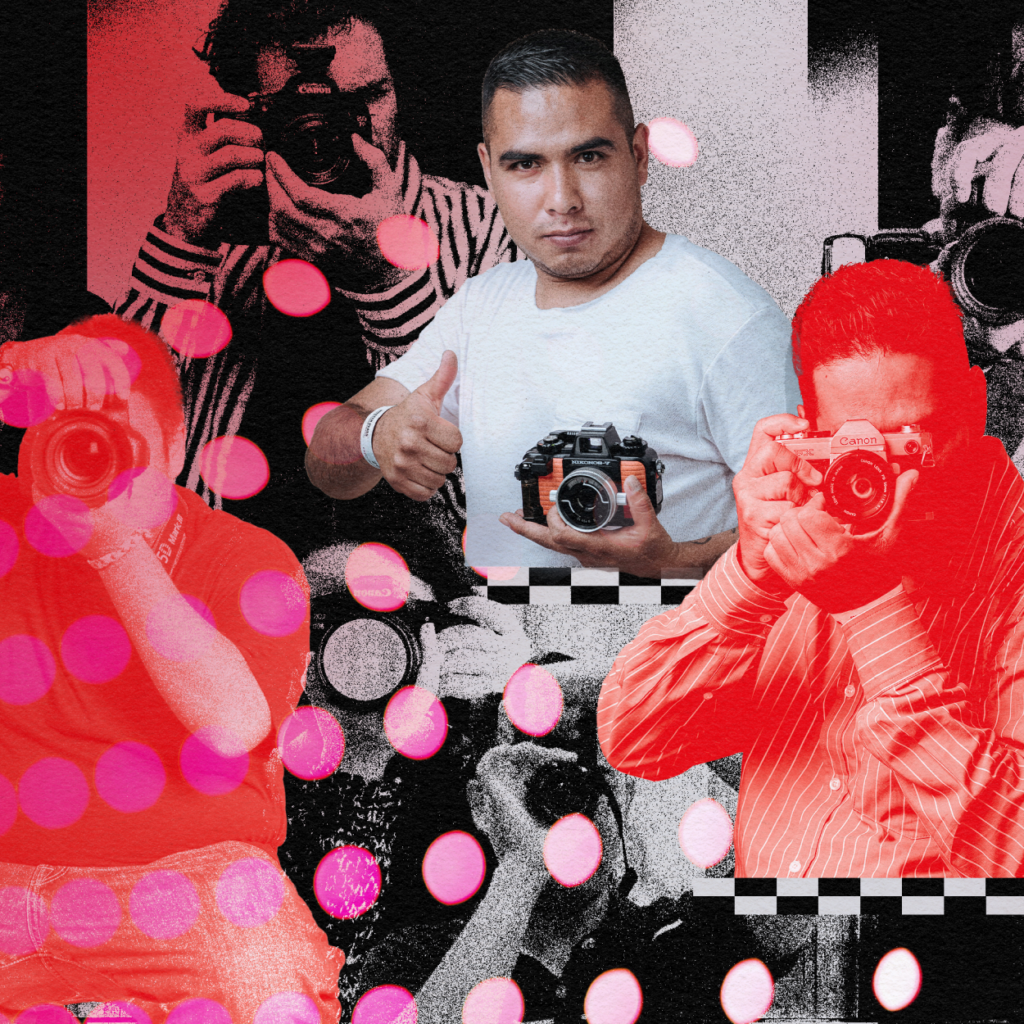
A lot has been said about the format-shaking ramifications of video podcasting’s rise. But relatively little has been spent on the state and quality of set design in podcasting. It’s an odd oversight for such a prominent feature in a show’s look and feel.
At Good Tape Studio, we’ve recently begun offering fabrication and set design services to clients with video podcasts. As this new normal spreads to production studios and networks across the industry, I thought it would be good to get a few opinions from experts on the current visual landscape of video podcast design. And, more importantly, establish some shared language for what you should consider before your next set buildout.
First, let’s review some basics before jumping headfirst into your set project.
- Camera setup: I won’t get into specific camera equipment recommendations, but the three-camera setup appears to be most common, with one center-wide shot and two tight shots on each subject. Most video podcasts feature either one-on-one interviews or two hosts interviewing a single guest. Ask yourself if this will be the most consistent setup, or if you anticipate needing additional framings for ad reads, subscriber-only content, four or more subjects, etc. How many cameras you have rolling simultaneously, how much of your set they will capture at once, and what portions of the background will be in frame will influence your set’s construction and design.
- Backgrounds: The rise of video has been spurred by how quickly short clips spread on social media. From a design perspective, it’s important to consider whether you want your tight shots to have similar or distinctly different backdrops. Is the cohesiveness in the design important? Or would you prefer complementary yet variable backdrops to keep fans engaged?
- Lighting: This is one of the most important and underappreciated items on this list. Lighting can drastically transform any space, and the most thoughtful set design can be undermined by hastily hung lights and a too-bright general wash. Be prepared to hire a gaffer (lighting designer and technician) to create a tone, mood, and texture that complements your set. (This will become especially important for shows that use multi-use sets; see below.)
Doubling Down on Audio
In a field fraught with funding frenzies and fallouts, audio-first industry veterans call for a reset.

Words by Benjamin Cannon
Art by Xinyue Chen
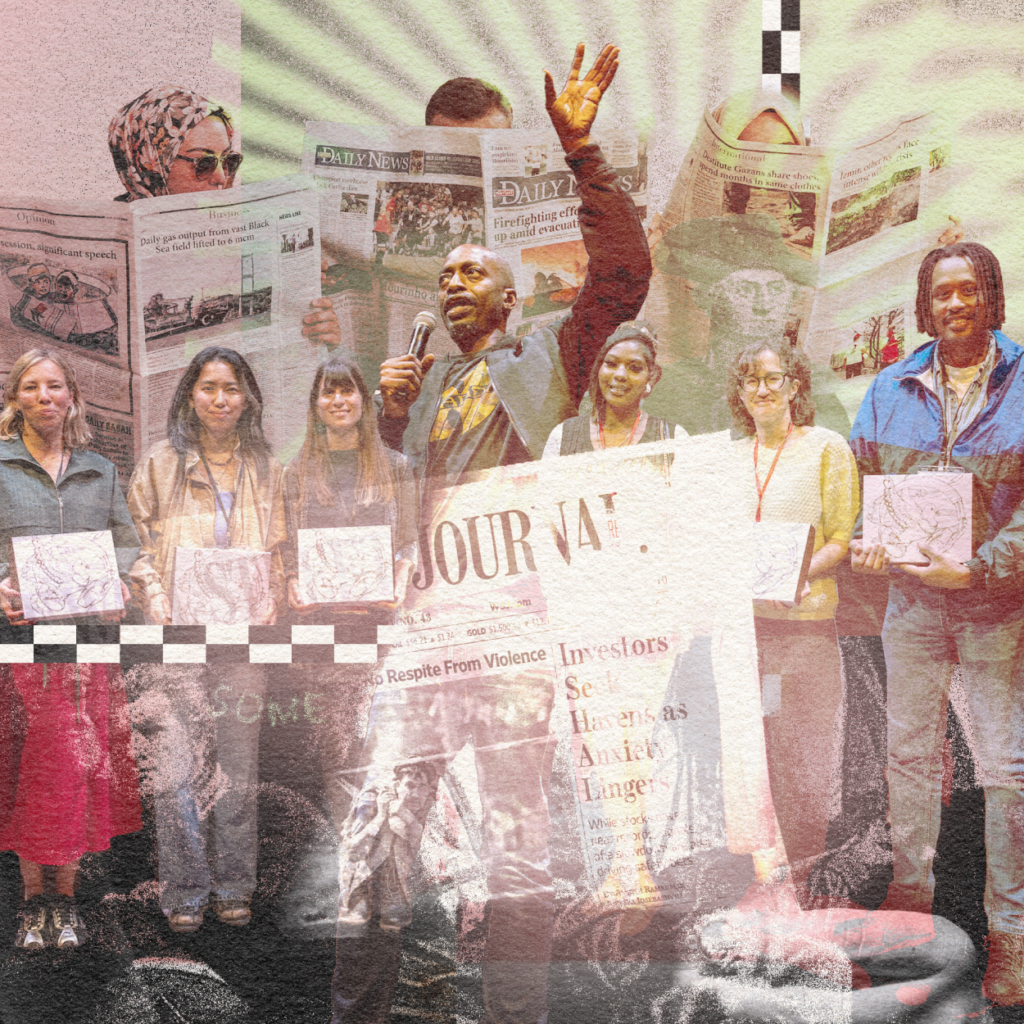
It was spring 2023, and Julie Shapiro was disillusioned with podcasts. Cofounder and longtime artistic director of the Third Coast International Audio Festival, Shapiro wasn’t just upset; she felt it in her core. The creative world she’d inhabited and championed for the better part of her life had become unrecognizable over the past decade of explosive growth followed by gutting contraction.
“It was as if the values and interests and passion that had brought us all into (audio) and sustained us as audio people were receding throughout the podcast landscape,” Shapiro said. “‘Imagination has left the building’ was a phrase that stuck with me in that period.”
She was referring, of course, to the notion that the longing for capital robbed podcasting of much of what made it special in the first place. Falling victim to this kind of King Midas syndrome, podcasting hit new highs in terms of cultural penetration and listenership, but one could argue it was at the expense of its artistic soul.
Rather than walk away, Shapiro chose to forge something new. It was evident that the future required change. Relying on the apparatus responsible for this ebb state wasn’t an option. So she embraced community as an act of rebellion against the retrenchment running through the medium.

Some other stories that have our attention, brought to you by Good Tape’s “Off The Record” — an event series creating real-time dialogues between podcast executives, creatives, and brands on hyper-relevant topics to evolve the medium.
- • Ashley Carman of Bloomberg dug into some stats on podcasters who left YouTube for Netflix. The takeaway? Jumping on the streaming train may be costing them.
- • Not technically pod news, but still worth your time: If you love magic and find yourself in NYC, the New York Public Library for the Performing Arts has a new exhibition: “Mystery and Wonder: A Legacy of Golden Age Magicians in New York City.” Learn all about the city’s magician boom in the late 19th and early 20th centuries, ushering in a “Golden Age of Magic” that gave us Harry Houdini, among other conjurers, spiritualists, and show folk. Through July 11.
- • And finally, a big thank you to Podnews’ James Cridland for his correction on our Feb. 25 newsletter subhead. Apple did not, in fact, coin the term “podcast,” but merely popularized it. Contributing editor Katie asks you to chalk this one up to blizzard-brain. Thanks for keeping us excellent, James!

Good Tape is proudly independent yet deeply rooted in community. If you value our work exploring the ideas, people, and forces shaping podcasting, share this newsletter with a friend. Or, better yet, become a subscriber. Your support helps sustain our commitment to elevating cultural and critical coverage of the podcast industry.
Katie Clark Gray is a Webby award-winning podcast producer, Pew Fellow, and partner at Uncompromised Creative. Currently she writes for Audible Originals’ “Scamfluencers” and “Business Wars.” Past credits include: “The Best Idea Yet,” “Masters of Scale,” “Spark & Fire,” “Meditative Story,” and feature film “The Paper Store.”