The Beating Heart of Gaza

In “Great Love: Gaza Monologues Revisited,” the fight for liberation is a story told over and over.

“Everything you are about to hear is 100% real, 100% true.” These words are heard frequently in “Great Love: Gaza Monologues Revisited.” One of the many apt uses of recapitulation throughout the series, it reflects genocide as a series of repetitions, not a flat timeline but a cyclical one.

Unfortunately, Zionists have their own refrains. A common one is that the history is “too complicated.” Meant as a barrier to entry for folks newly awoken to the fight for Palestinian liberation, it implies one must have a history degree and understanding of various 20th-century treaties to be able to speak about Palestine. It is, of course, a bullshit conceit, easily debunked in the first few minutes of the first full episode of “Great Love: Gaza Monologues Revisited,” in which Ali Dajani gives the most straightforward, comprehensible — and, yes, 100% real, 100% true — breakdown of the 1948 Nakba in just a few sentences.

So often, the onus of establishing truth is placed on the resistance, rather than on the oppressor, who has the media, institutions, political leaders, and even, in some cases, the public record backing them up. “Great Love: Gaza Monologues Revisited” serves as a poignant reminder that, although the responsibility may be misplaced, transforming truth into art by challenging false narratives and untrue refrains is worthwhile.

Hosted by Kaitlin Prest and produced by her audio art studio Mermaid Palace, the podcast serves as a multitemporal archive of Israel’s genocidal war campaign in Gaza. It captures in real time the first year of the current stage of the genocide, which intensified after October 7, 2023, while also revisiting history, namely through readings of pieces from “The Gaza Mono-Logues.”

A 2010 project by the Ramallah-based theater company ASHTAR Theater, the monologues consist of 33 personal narratives from Gazan youth. Performed throughout the world, this series often serves as an initial doorway into the fight for Palestinian liberation for folks new to the cause. In them, Israeli occupation of Gaza and greater Palestine is baked into everyday life, touching everything and making the monologues continuously relevant.

They are now as they were then, as they would have been a decade or more before. As “Great Love: Gaza Monologues Revisited” exemplifies, they don’t reward revisitation so much as require it. The podcast functions as a hybrid art-activism audio project that is similarly unbound by a specific time but deeply and steadfastly bound to a specific place. 

While the podcast was initially released in 2024, the various guests on “Great Love: Gaza Monologues Revisited” bring their own stories, whether direct or diasporic, of how Israel’s occupation of Palestine has impacted them, creating a striking layering effect. The monologues merge with the stories of the people reciting them. It’s a potent reminder of the political power of art and its ability to transcend time. “Same feelings, different towns,” guest and comedian Alaa Shahad said, referring to the ways his own story, set in Jenin, intersects with the Gaza monologue he recites. 

‘… it’s a podcast built to last, one that gives everlasting life to stories and lives under the constant threat of erasure. 

For many of the monologues, it’s impossible to know where their initial writers and orators — then children living under occupation, now young adults living under occupation, if they are not displaced or dead — are today. But their words extend beyond them like endless tendrils. “Great Love: Gaza Monologues Revisited” is capable of the same; it’s a podcast built to last, one that gives everlasting life to stories and lives under the constant threat of erasure. 

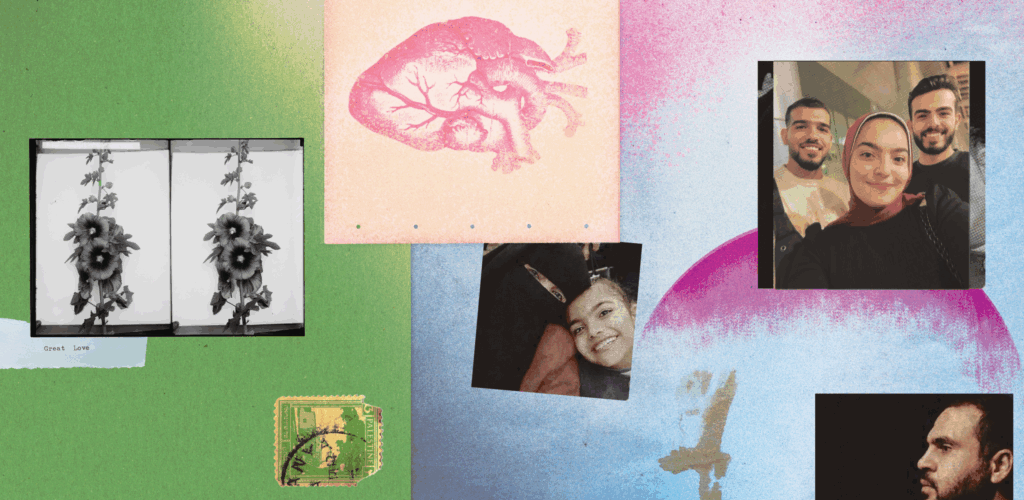
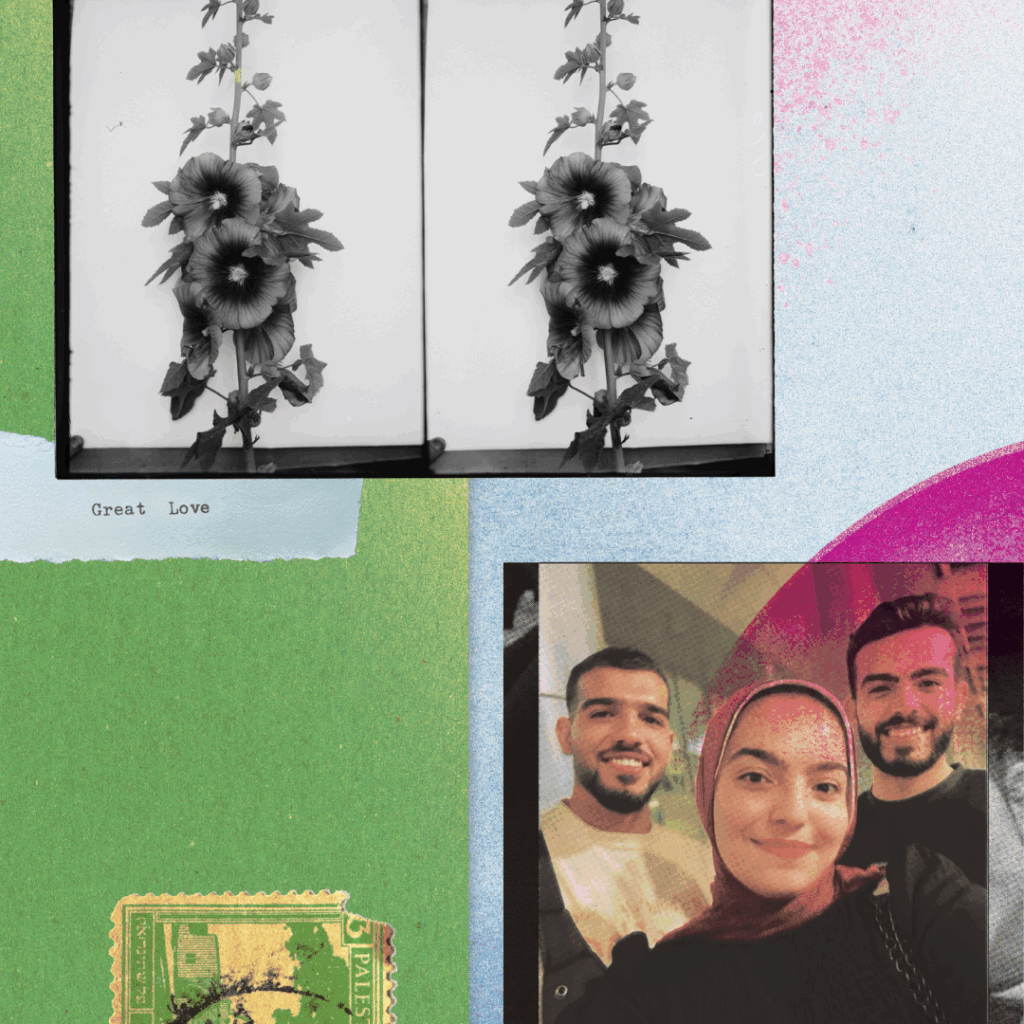
The series is a moving, often challenging work of narrative activism where the guests create a sprawling interconnected system, and while Prest does an excellent job hosting — balancing openheartedness and passion with a healthy dose of self-criticism for her own naivete and whiteness — it’s Tarneem, Ahmad, and Hamza Jaber who are at the emotional core of the podcast. Before the genocide uprooted their lives, the trio of siblings were pursuing medical careers. Their stories, and the organic, meaningful relationship that develops between them and Prest over the course of a year, are heartwarming.

“Great Love: Gaza Monologues Revisited” lives within The Heart, an experimental podcast and radio show, and, fittingly, feels like a heart itself, disparate parts coming together to make an alive, steady-beating thing. The actual audio production and formal mechanisms of “Great Love: Gaza Monologues Revisited” reflect and reiterate the layering nature of its narratives. Montage and audio collage work are used to great effect. 

This perfect marriage of form, mission, and narrative is most powerfully on display in the episode featuring artist and organizer Aliya Pabani, who uses a binaural microphone to document in real time a trip to a Toronto branch of Scotiabank, the largest financier of Israel’s weapons in the world. The binaural mic replicates the actual experience of hearing in the real world (wear headphones for the full effect), so listeners are with Pabani as she publicly recites “Gaza Monologue #19,” detailing the horrific extent of Scotiabank’s complicity. It is as close to an experience of actual witnessing as a podcast can ever get. 

In an era where mainstream podcasts often aim for virality through sensational yet ephemeral snippets, “Great Love: Gaza Monologues Revisited” is emphatically not. Instead, it resists that trend — every second matters, from the prologue to the epilogue. At one point, Prest devolves into a spiraling monologue of her own about the small personal sacrifices one would need to make to be able to give $1,000 to support the lives of displaced Palestinians. Her pleas — and the GoFundMe she plugs — are still very much relevant and active.

Whether you’ve been advocating for Palestine for weeks, months, years, or decades, this plea will resonate, and so will this podcast.

Kayla Kumari Upadhyaya is the managing editor of Autostraddle and a lesbian writer of essays, fiction, and pop culture criticism living in Orlando.